What Services Should a Period Underwear Manufacturer Provide?
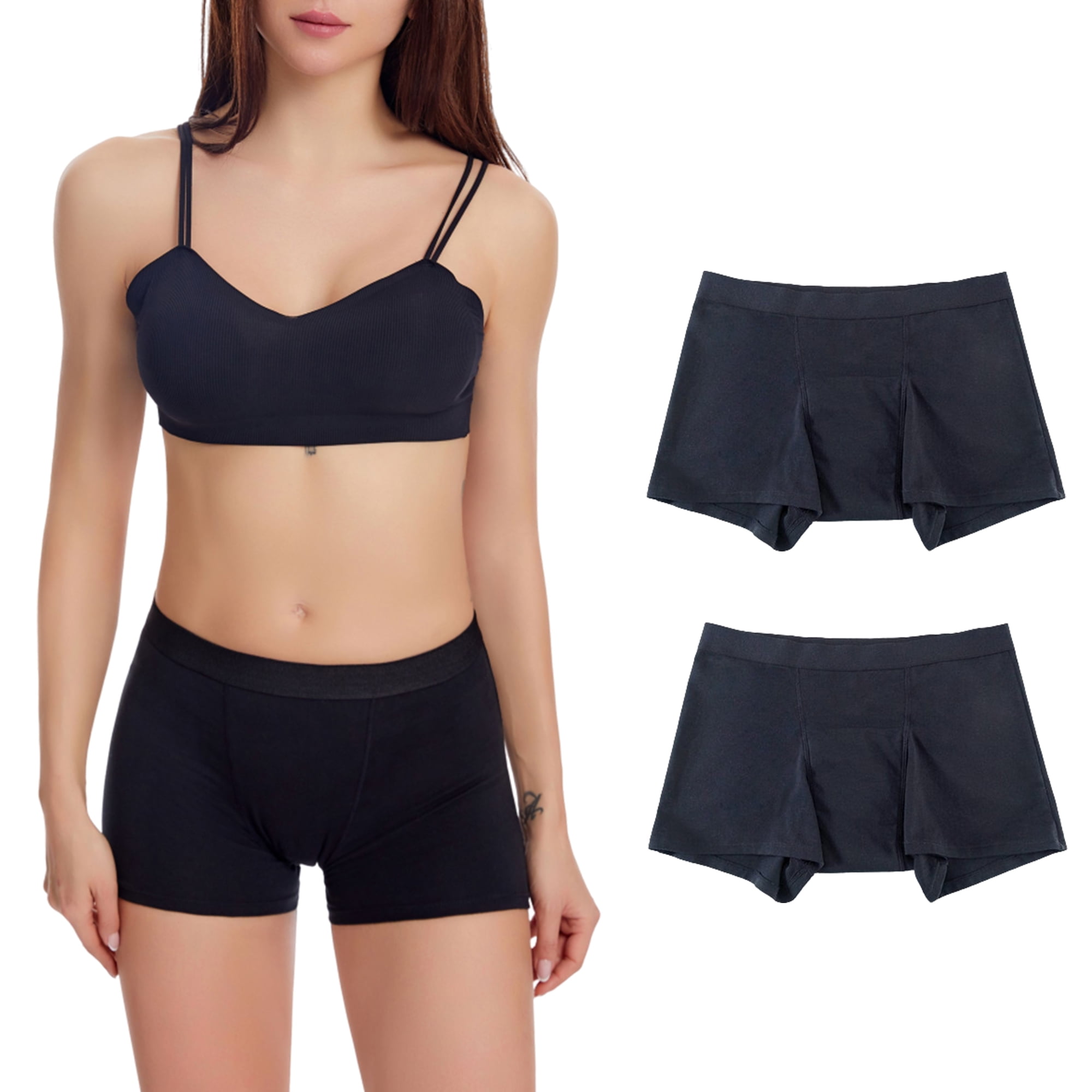
A period underwear manufacturer should provide more than cutting and sewing. A buyer needs material sourcing, multilayer gusset development, pattern grading, absorbency and leakage testing, wash testing, private labeling, packaging, production inspection, and export support. Period underwear may combine 3–5 functional layers, while a single style can require 5–8 sizes and several absorbency levels. Under EU Regulation (EU) 2023/988, applicable from December 2024, consumer products also require stronger product-safety and traceability controls. A manufacturer that records approved materials, measurements, test methods, production lots, and packaging specifications gives brands better control over repeat orders and product consistency.
Period underwear behaves differently from ordinary briefs because the gusset has to receive liquid, move it away from the skin, retain it, and limit leakage without becoming excessively thick. A typical construction may use 3–5 layers: a skin-contact layer, one or two absorbent textiles, a leak-resistant membrane, and an outer fabric. If a brand sells light, moderate, heavy, and overnight versions across 6 sizes, one silhouette already creates 24 size-performance combinations before colors are counted.
That product structure makes development support one of the first services to examine. A manufacturer should convert the brand's measurements and intended use into a technical pack covering fiber composition, fabric weight in g/m², stretch, seam type, elastic width, gusset dimensions, tolerances, label position, and care instructions. A measurement tolerance of ±0.5 cm can matter on smaller components, while poorly controlled elastic length can noticeably change leg-opening pressure and fit.
The useful question is not “Can you make period underwear?” Ask which gusset materials are controlled by supplier and lot, how replacement materials are approved, what measurements are checked during production, and whether the same construction can be reproduced 12 months later.
Material sourcing follows naturally because an approved pattern cannot perform consistently when its textiles keep changing. Suppliers may work with cotton, modal, nylon, polyester, elastane, absorbent terry or knitted structures, and polyurethane-based leak-resistant barriers. Elastane commonly represents only a minority of the fabric composition, yet even a change of several percentage points can alter stretch, recovery, hand feel, and finished measurements after repeated washing.
| Service | What the manufacturer should document | Useful buyer check |
|---|---|---|
| Fabric sourcing | Fiber content, GSM, width, supplier reference | Compare approved and bulk lots |
| Gusset development | Layer order, dimensions, construction | Test each absorbency level |
| Fit development | Measurement chart and tolerances | Review 3+ representative sizes |
| Testing | Method, sample condition, results | Keep reports by style |
| QC | Inspection standard and defect records | Compare bulk goods with approved sample |
| Packaging | Materials, dimensions, artwork version | Approve before mass printing |
Documentation matters because absorbency cannot be described reliably by simply saying “heavy flow.” A claim in milliliters depends on the test liquid, application rate, conditioning, pressure, test area, and definition of full capacity. Two samples made from similar-looking fabrics can produce different numbers when the method changes. Brands should therefore ask the manufacturer to record the method together with every numerical claim instead of treating one mL figure as a universal measurement.
Testing should extend beyond initial liquid capacity. Period underwear is reusable, so dimensional stability, seam condition, delamination, colorfastness, elastic recovery, and leakage performance after washing deserve attention. A development program might compare samples after 5, 10, 20, or more wash cycles according to the brand's specification. The same wash temperature, detergent conditions, drying method, and sample conditioning should be used when results are compared.
Chemical compliance should be handled at component level, not only at finished-garment level. A pair of underwear may contain main fabric, gusset textiles, membrane, elastic, sewing thread, printed ink, heat-transfer material, labels, and adhesives. For products sold in the EU, REACH restrictions can apply to substances used in textile articles, while Regulation (EU) 2023/988 has applied since 13 December 2024 and places broader obligations around consumer-product safety and traceability.
A manufacturer should therefore retain supplier declarations, material specifications, test reports where required, and records connecting approved components to production. Third-party laboratories such as SGS, Intertek, TÜV, or Bureau Veritas can be used when independent testing is requested. Testing scope should be selected for the destination market and product specification rather than ordering a generic textile test package that may omit relevant components.
Once materials are defined, sampling becomes easier to control. A practical development sequence can include 4 stages: prototype, fit sample, size set, and pre-production sample. Complicated products may need additional revisions. Every revision should identify what changed—gusset length +2 cm, waistband reduced 1 cm, absorbent layer replaced, or seam position moved—so an approved feature is not accidentally returned to an earlier version.
Fit work should include more than one medium-size sample. If a range covers XS–3XL, reviewing only M gives little information about grading at both ends. A brand can request at least 3 representative sizes, such as XS, M, and 2XL or 3XL, before approving the complete range. Rise, hip, leg opening, gusset width, gusset length, elastic length, and stretch recovery may need different grading rules rather than one fixed percentage increase.
Period underwear needs close body contact around the gusset and leg openings, but tighter is not automatically better. Excess tension can create discomfort and visible garment lines, while insufficient tension can reduce contact and increase the chance of side leakage.
Gusset engineering deserves separate attention during fitting because its dimensions affect both coverage and wear. Overnight products may extend the functional area farther toward the back than daytime briefs. High-waisted, bikini, boyshort, teen, and postpartum styles also place the gusset differently. A manufacturer should be able to alter layer length and placement without automatically increasing every layer to the same dimensions, which can add unnecessary thickness.
Private-label work starts after the physical product becomes stable. Manufacturers may provide woven labels, heat-transfer labels, printed care labels, logo waistbands, hangtags, barcode stickers, retail boxes, paper sleeves, and individual bags. A 6-size range in 4 colors already produces 24 SKUs; adding 3 absorbency levels can increase the assortment to 72 SKUs, making label, barcode, carton, and packing accuracy a measurable production requirement rather than an administrative detail.
For brands comparing suppliers such as Ljvogues, customization should therefore be assessed by asking what can actually be changed at the fabric, pattern, gusset, waistband, label, and packaging levels. A factory offering 20 stock colors is providing a different service from one that can develop a new fabric composition, custom-dye material, alter absorbent construction, grade a proprietary size chart, and preserve the specification for repeat production.
MOQ information should also be broken down by component. A factory may quote 500 garments per style while a custom fabric mill requires 1,000–3,000 meters, or a branded waistband supplier requires several thousand meters. Packaging can have another minimum. Buyers need garment MOQ, color MOQ, fabric MOQ, trim MOQ, and packaging MOQ separately because a nominal 500-piece order can still leave unused materials that affect pricing.
Production planning should state when lead time begins. A quoted 30-day production period may start only after fabric arrival and pre-production approval rather than on purchase-order date. If custom dyeing takes 15–25 days and packaging needs another 15 days, those activities need to be included in the schedule. Material approval dates, production start, in-line inspection, final inspection, and shipment booking should be visible to both parties.
Quality control then connects the approved sample with bulk output. Inspection should cover measurements, shade consistency, fabric defects, seams, skipped stitches, elastic attachment, gusset placement, layer orientation, labels, barcodes, packing quantity, and carton markings. Under ISO 2859-1 sampling principles, inspection plans can use defined acceptance quality limits rather than relying on a quick visual check of a few conveniently selected garments.
Functional areas require additional checks because a visually acceptable brief can still contain a construction error. The manufacturer should confirm that the correct gusset layer is facing the body, the barrier is not damaged during sewing, absorbent pieces have the approved dimensions, and seams follow the approved location. For a 10,000-piece order, even a 1% recurring construction defect represents 100 garments, so early in-line inspection is more useful than discovering the same issue after packing.
Traceability becomes more important as order volume increases. Production records should connect purchase order, style number, color, material lot, production date, inspection report, and carton information. If a 2027 repeat order behaves differently from a 2026 batch, records allow the brand and factory to compare fabric suppliers, GSM, membrane references, elastic lots, wash-test results, and production settings instead of relying on staff memory.
Export support completes the manufacturing service because finished garments still need correct commercial paperwork. International orders commonly require a commercial invoice, packing list, HS classification information, carton dimensions, net and gross weights, country-of-origin information where applicable, and coordination with the buyer's freight forwarder. A shipment containing 72 SKUs needs accurate carton-level quantities so warehouse receiving does not become a manual recount.
After shipment, the factory should keep approved patterns, measurement charts, bill of materials, color references, packaging artwork versions, test reports, and production records for repeat orders. When a supplier discontinues a fabric or membrane, the replacement should be sampled and approved before bulk use. A material that is only 5% different in composition or noticeably different in GSM can change stretch, drying, absorbency, or hand feel even when the finished garment looks almost identical.